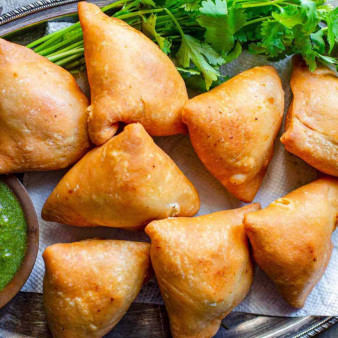


Ingredients for - Vegetable Samosas With Mint Cilantro Chutney
How to cook deliciously - Vegetable Samosas With Mint Cilantro Chutney
1. Stage
Make the chutney: Combine cilantro, mint, lemon juice, garlic cloves, jalapeños, ginger root, salt, and cumin seeds in a blender or food processor. It should be thick enough to coat a samosa when dipped. If you want it thinner, add 2 to 3 tablespoons of water. Transfer the chutney to a bowl, cover it, and wait until the samosas are ready.
2. Stage
Begin making the samosa dough: In a large mixing bowl, combine all-purpose flour and salt.
3. Stage
Drizzle in the ghee: Drizzle the melted ghee or vegetable oil around the flour mixture. Pick up a handful of the dough and rub it between your palms to mix the ghee as evenly into the flour as possible.
4. Stage
Check the ratio of flour to ghee: To see if the flour to ghee ratio is good enough to make crispy pastry, hold a portion of mixture in your hand and make a tight fist, then open it. The mixture should hold its shape.
5. Stage
Add water: Add water to the flour one to two tablespoons at a time while kneading. Knead into a smooth, firm dough. This should take about 5 minutes. Wrap the dough in cling wrap or cover with damp cloth until ready to fill the samosas.
6. Stage
Make the filling: Set a medium pot filled with water over medium high heat. Add the peeled quartered potatoes, and bring them to a boil. Boil the potatoes until they are fork tender, about 15 minutes. Set a large skillet over medium high heat and add the oil. Once the oil shimmers, add the cumin seeds to the skillet. Once they sputter, turn the heat down to medium and add the onion. Sauté for 3 to 4 minutes until the onion is softened. Add jalapeno, coriander, garam masala, ground turmeric, and salt. Give it a quick stir. Add the peas. Drain the potatoes and add them to the skillet. Using the back of a wooden spoon or a potato masher, coarsely mash the mixture, leaving no large chunks of potatoes. Stir to combine. You want it mixed well. In the end, the filling should be relatively dry and thick. Set aside to cool completely before filling the samosas.
7. Stage
Knead the dough: While the filling is cooling, unwrap the dough, and knead it again for a couple minutes to make it smooth.
8. Stage
Divide and shape the dough: Divide into 6 equal parts. Roll each into smooth balls, and cover with a damp cloth. Pick one ball, press between your palms to flatten, and lightly dab the surface of dough with oil or ghee. This prevents the rolling pin from sticking to the dough. Resist the urge to dust the countertop with flour, as the loose flour will burn when you drop the dough in the oil to fry, giving the samosa an off taste. Use a rolling pin to flatten the dough into a circle 6 inches in diameter, 1 mm thickness. Cut in half so you have two half-moon shapes. If you’re having a difficult time rolling out the dough, place the round between pieces of wax paper or parchment.
9. Stage
Fill the samosa: Pick one half and brush the edges with water using your finger. Pick one edge of the dough and place it on top of the other edge, making a cone shape. Gently pinch along the edges of the cone, making sure they are sealed. Add 1 1/2 tablespoons of filling into the cone. This should fill it 3/4 of the way. Brush water on the edges of the cone's opening, and pinch the edges together to close the samosa. Repeat with the rest of the dough. Cover sealed samosas with a damp cloth. In the end, you should have 12 samosas.
10. Stage
Fry the samosas: In a deep pot, add the oil and heat to 200°F over medium heat. Add the samosas to the oil and fry in batches; do not overcrowd the pot. Fry until the samosas begin to turn golden. Once the samosas are golden, increase the heat to medium high, bringing the temperature up to 350°F, and cook for another 5 minutes until the samosas have darkened to a deeper brown. Take the samosas out of the oil and transfer them to a plate lined with paper towels. Reduce the heat back to medium or medium low, until the oil temperature drops back to 200°F before going forward with the next batch of samosas. Getting this part right for a samosa is the trickiest part. If you start with high temperature oil, the pastry will turn soggy and oily. So, starting with warm oil and then increasing the heat is the way to go here.
11. Stage
Serve: Serve immediately with a side of green cilantro mint chutney.


